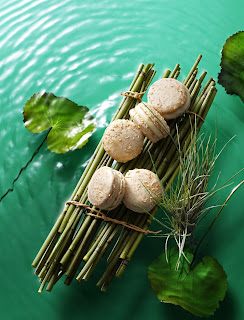


by Paige Donner
Just a few tantalizing photos... All details and descriptions to these outstanding Paris Patisseries can be found HERE at 10BEST Paris.
All photos are copyright the illustrated pâtisseries.


Okanagan Wines, Okanagan Local Foods.
by Paige Donner
Just a few tantalizing photos... All details and descriptions to these outstanding Paris Patisseries can be found HERE at 10BEST Paris.
All photos are copyright the illustrated pâtisseries.

Australian Wine Regions
by Susie Edwardson
(guest contributing writer)
Is there anything better than guaranteed sunshine and countless rows of vineyards laid out before you, all just waiting for their unique, lovingly produced wines to be tasted? With its next door neighbour New Zealand often more commonly being regarded as the champion of wine produce Australia has only in recent years become more renowned for wine making. Sydney's culture of having a focus on the celebration of food and wine, and with Hunter Valley region being a short drive away this region has certainly provided stiff competition for New Zealand.

Hunter Valley Australia
Hunter Valley Wine Region
Hunter Valley has played a pivotal role in the success of wine production for Australia, and according to TravelOnline.com this region is accountable for the multi-billion dollar a year industry. It's no surprise really when you take into account the idyllic setting of these wineries where a relaxing day walking through the vineyards is a holiday in itself. According to Drayton Wineries, they were one of the first to set up in this area, changing from farming grain to vineyards in the late 1850s. This region is most certainly well known for its full-bodied, fresh white wines, and medium-weight reds. The fact of the matter, though, is that with any tour around this fabulous area you are guaranteed to find the perfect wine for you. Even if you are not the biggest lover of wine in the world, with the variety on offer here, you will be hard pushed to go home without a new favourite tipple. What better place to enjoy this than under the Australian sun, with some of the most laid-back locals in the world?
Sydney's Love of Food and Wine
Perhaps one of the main reasons for the continued success of Hunter Valley wines is because of Sydney's attitude towards dining out, food and wine. As is the case with many metropolitan cities, Sydney opens new and quirky restaurants week on week, with the majority serving wine from the local region to complement decadent dishes. TimeOut Sydney states that wine bars have been popping up all over Sydney of late, which is no doubt as a result to its close proximity with Hunter Valley and the world-renowned wines and ports of which are produced here. The Sydney Morning Herald fortifies the notion that Sydney is a great lover of food, stating that 40,000 festival-goers just last month took to Sydney Cellar Door, a food and wine festival set up in Sydney's Hyde Park. This is a city that loves all that is focused around food and wine, making it the perfect tourist destination for anyone with a similar passion.
Travelling Australia
The availability here of unique wines is no doubt a great tourist attraction, and it's not only the Hunter Valley region in Australia which provides such a great experience for wine lovers. It's definitely also worth checking out Swan Valley near Perth, which also has beautiful chocolate manufacturers in the same area, as well as lavender farms. Any wine tour of Australia must also surely include The Adelaide Hills, considering Adelaide often claims to be the wine capital of Australia due to the sheer volume of wine regions surrounding the Southern city. To really get the most of the wine and food available, travel must be on the cards—JetStar state that as a result of their value focused flights people are able to travel around the whole of Australia more easily and frequently. With such a diverse country it most certainly is worth making the trip to visit a variety of cities here, as they are most definitely all have their own wonderful quirks. According to Greyhound Australia five million people travel over thirty-eight million kilometres a year with them. A great way to see it all and really soak up the different taste of Australia, though, is to go on a specific food and wine cruise—Iglu Cruise state that this is the ideal way to really get on board with local food traditions and dining etiquette whist also allowing you to experience all the variety and diversity of international wines and cuisines.
Australia has so much to offer as a country with a real love for laid-back vacations, exquisite food and delicious varieties of wine, creating a driving force behind the need to travel around it. Coming back to Sydney and Hunter Valley, though, here is where you'll find the perfect celebration of wine and food, making this the top destination on any trip to Australia
by Paige Donner
On a recent round-up of Paris interviews, I succeeded in doing the near-impossible - catching up with the man-in-motion, the chef who never stops, Mr. Yannick Alléno, 3* Michelin chef and champion of local-sourced ingredients for his outstanding cuisine.

You can catch my interview with him on World Radio Paris by clicking on the World of Wine play button Here. He talks about his upcoming book that re-envisions French sauces and also his winemaking endeavors with M. Chapoutier in the Rhône Valley. Episode will air shortly...
Until then, here's what's new:
Starting in a few short weeks, mid-April to be exact, you will be able to make reservations for a very special dining experience:
Where - Moët & Chandon's l'Orangerie in Épernay
This is the private l'Orangerie on the Trianon Garden grounds just across from the main cellars on Avenue de Champagne in Épernay. The grounds are only open to invited guests, except for once a year when they give tours of the gardens, including the l'Orangerie, on France's national Garden Day.
A dining experience in this magical setting is sure to be a memorable one.
Who - Yannick Alléno, 3* Michelin Chef and Benoit Gouez,
Moët & Chandon's Chef de Cave.
Chef Yannick Alléno, already a legend not just for his 3* Michelins but also for his extraordinary re-visioning of French cuisine and his dedication to local foods and ingredients which he uses exclusively when creating his menus and dishes.
When - June 9 2014 to July 9 2014.
What - A sublime dining experience.
Photos were taken at his newest Terroir Parisien, at Palais Brongniart in Paris, otherwise known as La Bourse. Photos copyright Paige Donner 2014.
sponsored post
Next Stop Spain is the benchmark for the VIP clients in arranging their trips to Spain since previously there was no company with the experienceto put the entire country at the disposal of those who wanted to discover the majesty of our country. Due to this continuous pursuit of excellence they have created a new way to travel and take care of your pets stay for unique customization.
The prestigious luxury travel agency Next Stop Spain is the first one to offer specialized travel for the most demanding clients ´pets : private jets, limos , hairdressers, five star hotels ...
"We are receiving a very high demand for luxury stays for pets of our clients. Currently, a program designed to measure a known entrepreneur includes limousine transfer for his pet to his private plane where everything is arranged during the flight so he can enjoy his favorite dishes made by an expert in canine nutrition chef . After his arrival and transfer by helicopter each day includes different activities: from costume tests from brands like Little Lily, which make replicas of the dresses worn at the Oscars by celebrities, to education courses and canine psychology taught by the most famous dog trainer in the world, known for his television programs "explain the founders of Next Stop Spain.
It is well known that millionaires who love their pets spare no expense when it comes to make them happy and Spain already have numerous five-star hotels for canine customers. Dogs suffer when they have to leave their homes and separated from their owners for a few days , but the sadness and anxiety is not so much when they can enjoy the exquisite attentions of this canine luxury residences, which include massage services, beach walks, dog grooming salon, gym, private pool, supervising caregivers 24 hours, music, television, and even canine hydrotherapy beds scented with lavender. Besides, how could it be otherwise, the owners are informed of the status of their dogs continuously by sending photos and videos or directly from the webcam.
By Paige Donner
As I sit here at my desk and write this blog post, my little doggy is sitting on my lap. It's her preferred spot when I'm writing at my desk. Yes, I am lucky, aren't I ?
I mention this because it feels so right to have such a comforting presence so close by while writing about Eric Frechon's newest restaurant, Lazare. Eric Frechon is one of France's star chefs. He has 3 Michelin Stars. The restaurants he oversees are at Le Bristol Hotel, the Paris Palace that is a stone's throw from the Elysée and favored by that sort of lofty and VIP crowd. And now, in addition to all that, he's opened up his own independent restaurant in Paris called Lazare.

Chef Eric Frechon at his new Paris restaurant Lazare photo by Paige Donner copyright '13
So it was with curiosity and no real pre-set expectations that I set out to discover Lazare. What I found was a chef who has remained connected to his kitchen and, more importantly, to the people he's preparing and serving his food for.
At Lazare what you'll find are Mom's recipes, re-visited a bit with Frechon's flair. The whole restaurant, from the food to the ambiance has Comfort Food stamped on it. And within it. The dishes are hands down a delight. And I hate to say it, but that's sort of to be expected from a 3-Michelin Starred chef, isn't it ? I mean, right ?
So why would I choose Lazare on a Sunday morning for its €36 brunch over dozens and dozens of other venues in Paris, all outstanding ? Besides being a fan of the kind-hearted and gentle Frechon, his new restaurant speaks to me on several levels.
I like, for example, how the dishes are served tableside. My pumpkin soup, the lightest, creamiest, fluffiest pumpkin soup I've ever tasted, was served from its tureen at the table by my courteous and friendly server. As was my dining partners poached salmon with autumnal roasted vegetables. It made me feel like I was eating at a friend's house. And I could be sure that none of the dishes had been kept even for a moment under a heat lamp awaiting the server's return .
What else ? I liked how the big black chalkboards hung on the tops of the walls that reach up to the high ceilings were written like a train schedule, with departure times and then the indicated destination, which in this case was a culinary one. Such as departure 15 :47 Aperitif and Snacking.
And of course I loved loved loved how Mr. Frechon explained to me that his signature Paris – Deauville dessert was one that he had poached first off his mom and then tweaked a bit to get it just right to serve in his new restaurant, located at the famous – and fully refurbished and renovated – Gare St. Lazare train station. If you haven't guessed it yet, the station is known for its departures to Deauville leaving from Paris.
Frechon has achieved here comfort food. Yes it's stylish but not so fancy that it's unapproachable. It's more like the comfort food that a 3-Star Michelin chef would imagine. It's a Paris Newest not to be missed and the restaurant's proximity to the Galeries Lafayette – Printemps shopping district makes it a perfect stop-in for lunch, dinner, and/or a snack at the bar. And of course Sunday Brunch. Tip : Call ahead for reservations.
Parvis de la Gare Saint-Lazare, Rue Intérieure

by Paige Donner
All photos and media c. Paige Donner, Local Food And Wine.
Vincent Dallet is one of the not-to-miss patisseries and chocolatiers in the Champagne region. With shops in both Épernay and Reims his chocolate confections, his melt-in-your-mouth chocolate almond croissants, and, of course, his patisserie perfect cakes and macarons all sell out every Sunday morning and each day of the week he's open as well.
See Full Slideshow on Local Food And Wine

His wife works the cash register and is always kind and welcoming. Mr. Dallet's gift to the region, and to gastronomes everywhere with a sweet tooth who happen to find out about his creations, is the « Maca'Bulle » which is a macaron made with an ivory champagne flavored ganache center sunk into a flute of champagne, a sort of macaron-champagne float.
See Full Slideshow on Local Food And Wine
In these photos you'll see him demonstrating how to make a tropical fruit flavored macaron with a pineapple, mango, passion-fruit coulis. Two guiding priciples he says are to choose fruit at its perfectly ripe perfection – for pineapples this means using your nose and picking the one that smells like honey. And the other secret to perfect macarons is using the right finely ground almonds ; He sources his from a region in Spain that grows the best almonds in the world, he swears by it.
In Reims his shop is called Chocolaterie des Sacres and can be found at 47, cours Jean-Baptiste Langlet. Chocolaterie-des-Sacres.com.
by Paige Donner
All photos copyright Paige Donner 2013 All Rights Reserved
Paige is the host of World of Wine radio program on WorldRadioParis.
Planning a trip through Champagne during harvest time might at first feel like mission impossible, but if you use a few basic principles by which to plan your itinerary it can be more gratifying than imagined being at the center of all the harvest action. Certainly it's guaranteed to be visually and sensorially rewarding.
First thing to do is check to see when floraison, or flowering of the buds, were for the year. That information is easy to come by in any of the wine journals or online. From that reference point, count about 100 days out and these are your dates for harvest time, give or take a couple of days. So with a solid three months in advance to plan your exact days of arrival and departure to coincide with the actual 10 days to 2 weeks of harvest, plenty of options will still be available for you when it comes to booking hotels and harvest time excursions.
This year's Champagne harvest had a relatively late flowering, in parts it was the end of June, in others it was the beginning of July. Which putvendanges this year into the first two weeks of October. A remarkable contrast with, say, the harvest of 2011 one of the earliest Champagne harvests in recorded history. That year put harvest time, a date of official decree by the CIVC, Comité Interprofessionel du vin de Champagne, late August /early September.
In the strictly managed appellation of Champagne, the grapegrowers do not have the right to harvest when they will. "We are obliged to wait for the dates given to us by the official CIVC decree," explains Anouk Westeel, Champagne Bollinger's communications person. With 164 hectares owned by this venerable house, they wait with bated breath every harvest season for the CIVC announcement. Hence, the diverse region sees a staggered harvest with some areas beginning sooner than others.
"All the vineyards you see spread out before you, they're a patchwork of parcels owned by different houses; Not all of this belongs to Bollinger," further explains Westeel, looking out from atop her preferred vantage point, the pinnacle of the very select Côte des Enfants, a steeply perched plot of Pinot Noir just up and behind the village of Aÿ that is used for their prestige cuvées. "Other of our vineyards are in the Côte des Blancs, for example, which already started harvesting a few days ago" she points out.
With a bit of astute planning, then, a harvest time trip through Champagne can be timed to be at the center of the action for the duration.The key to getting the richest experiences out of harvest season in Champagne is to skirt the bigger cities of Reims and Épernay and hug the smaller towns and villages such as Avize, Aÿ, Hautvillers and Rilly-la-Montagne. To do this, your own transportation is essential.
From Paris there's a fast train to Reims (45 minutes) or a slow train to Épernay (1hour 15 minutes). Either are good starting off points and both cities offer car rental options. You can also hire a car and driver or take taxis to various destinations, options you can tailor to your budget and spirit for adventure.
If you hire your own rental car, the Route Touristique du Champagne offers marked roads through some of the prettiest of the Champagne countryside, such as the ambling hills covered with Pinot Noir vineyards extending between Reims and Épernay, the Montagne de Reims region; Another area, the famous Côte des Blancs, revered for its much-sought-after Chardonnay grapes, extends just south of Épernay and its relatively flat roads and expansive terrain through hectares upon hectares of vineyards are also marked by the Route Touristique du Champagne.
In the Montagne de Reims, Rilly-la-Montagne offers a choice of restaurants from the Michelin-starred Le Grand Cerf to local favorites such as Le Mont Joly which serves big, thick steaks on cutting boards and at reasonable prices. The prestigious L'Assiette Champenoise (two Michelin stars) is in neighboring Tinquieux - reservations imperative - and Rilly-la-Montagne even has its own Châteaux et Hotels luxury accommodations, the Château de Rilly (lechateauderilly.com). This little enclave butts right up against theParc Naturel Régional de la Montagne de Reims, a designated national park reserve. In the early Autumn the Château in Rilly offers weekly jazzsoirées, well-attended by locals.
The great advantage to travel in Champagne during harvest time is not just the spectacular visual backdrop of ripe bunches of grapes hanging from exquisitely tended vineyards that surround quaint little historical French villages, but also the wave of high-energy and activity that is evident everywhere you look when you are in the smaller villages. Even if you are not a Champenois, it's unavoidable not to get caught up in the activity, the high spirits, the frenetic enthusiasm that is vendanges.
A Champagne village that can offer these rich experiences is Aÿ, home to Bollinger Champagne and one of the original historical Pinot Noir growing villages of Champagne. Wine enthusiasts will particularly appreciate Aÿ with its champagne houses, such as Ayala, Deutz and Collet, seemingly on every corner, punctuated only by the requisite boulangeries, crêperies and pharmacies.
One of the loveliest and least known hotels of the region is to be found here in Aÿ. Hotel Castel Jeanson (casteljeanson.fr) is the lovingly restored work of Madame and Monsieur Goutorbe whose champagne house is just a few doors down from the hotel. Deceptively simple when seen from its exterior, the hotel offers a large enclosed courtyard graced with stained glass windows on the buildings that surround the spacious courtyard which house its 17 rooms and indoor swimming pool.
When I casually commented to Madame Goutorbe that one would never expect such exquisite luxury from her modest website, her response was that she prefers not to boast about her hotel's charms, either in picture or in word, "I'd rather that my guests be delightfully surprised when they discover it for themselves," she confided. I told her that in English we have a phrase for this: "Underpromise and overdeliver."
For the Goutorbes, who are originally nursery managers and vine cultivators and now vineyard owners themselves, the 5 year restoration process for the dilapidated and abandoned building that their gorgeous hotel once was, was a much bigger labor of love than they had ever anticipated. And it shows. Busy seasons are May, June and September, October.
Of particular interest to the wine geek will be the discovery of the Villa Bissinger, the Institut International des Vins de Champagne. With a name like that it's easy to imagine that this is a year-round school for serious sommeliers studying for their Master of Wine certification. In fact, it is a facility, unique of its kind in Champagne, where champagnes in all their diversity and all their terroirs are presented, tasted, explained and discussed.
It welcomes groups of, "A minimum of 6-8 people, and up to 50," says Villa Director Etienne Monet. The modern classroom interiors and theater-like seating are in sharp contrast to the 19th c. mansion in which it is housed. Groups traveling to the region can enjoy participating in a morning or afternoon or even full day of "courses" about champagne at Villa Bissinger and you needn't be professional or in the trade to qualify, but advance booking is required (villabissinger.com).
Another excursion Aÿ offers is a guided pedestrian trail that leads you past historical and cultural landmarks in the village. One thing you'll find about the tourist offices in the region is that when you know what to ask for, they will provide the information. It all hangs on knowing what to ask for. So if you ask for Les Musardises Agéennes, you will be given a brochure that marks a trail to follow through the village where plaques and signposts mark your way. The starting point is at Villa Bissinger. From there the footpath follows the small streets up along the vineyards which are just behind the village and eventually down past the former ancestral home of Jacques and Lily Bollinger at 16 rue Jules Lobet. The whole walking excursion lasts no more than an hour, not counting bakery stops and café pauses along the way.
Hautvillers
Just a few kilometers past Aÿ is the celebrated and touristy Hautvillers. Famous as the village of Dom Perignon, the 17th c; monk and "inventor" of champagne, this charming little hilltop village gets its fair share of tour buses. But this hasn't diminished its charm and the church, L'Eglise Abbatiale d'Hautvillers, is a breathtaking gem which houses the grave of Dom Pierre Perignon marked by an inscripted stone. The Abbey where the monk lived is just behind but is not open to the public, only to guests of the private corporation which owns it.
A local favorite hang in Hautvillers is Le 36 which offers a solid selection of grower champagnes by the flute with small-plate snacks to accompany. (Le 36 is not to be confused with Épernay's Le 26, hands down theCapitale du Champagne's friendliest place to order pizza and a bottle of champagne while you kick back and watch the rugby match on the big-screen TV with local vineyard managers and workers).
Just past Hautvillers is Fleury-la-Riviere, what many say is one of the prettiest little villages in Champagne. La Cave Aux Coquillages is the must-see here. It is a cellar-museum housing fossilized seashells from Champagne's Kimmeridgean soils. Champagne connoisseurs will appreciate this as it's these seashells and the ancient seabed that the region of Champagne once was, that lends itself to the particular evolution and finesse of its chalky soils and elegant terroir.
The Côte des Blancs
Switching directions now and heading into Chardonnay territory still requires a vehicle. The Côte des Blancs boasts the most expensive grapes in Champagne. Its Chardonnay vineyards yield the grapes that give the most celebrated champagnes their elegance and finesse, say the experts. The majority of champagnes are a blend of the three AOC approved grape varieties: Chardonnay, Pinot Noir, Pinot Meunier. The exception to this are the Blanc de Blancs, blended completely from Chardonnay grapes and the Blanc de Noirs, blended from either or both of the red varietals.
Among the many, many excellent producers to be found in the Côte des Blancs, in the celebrated villages of Oger, Le Mesnil-sur-Oger, and Vertus to name several, few enjoy the cult status of Anselme Selosse and his Selosse champagnes. Champagne connoisseurs travel to the region just to find some of this sought-after champagne which sells out in Japanese, English and Belgian markets in record time after its release.
Even if you're not on a mission to buy rare champagnes, you can still enjoy a bit of this rarefied air by stopping in at the hotel and restaurant opened by Corinne and Anselme Selosse a few seasons ago. The Hôtel Les Avisésis in Avize, one of the bigger little villages in the Côte des Blancs, home to the viticultural trade school of the region and also to the champagne house Selosse. The refined luxury of the hotel is the fruit of a meticulous restoration process of a building dating to the 1820's that "always had its history steeped in wine production." It's best to call to make reservations for one of the ten rooms as you may send 3 or even 4 emails to the contact address on the website before getting a response, or not (selosse-lesavises.com).
Other than this emphasis on the need for your own transportation, things don't have to be difficult when touring the charming Champagne countryside. Hautvillers and the Côte des Blancs require a vehicle. But if you're without one, Rilly-la-Montagne and Aÿ can be accessed by the little commuter train that runs between Reims and Épernay every few hours from morning until early evening and makes stops in both villages. Roundtrip ticket fare is under 20 euros.
#LocalFoodAndWine


